What does it mean to be a Grand Cru?
Château Du Parc has the honor of being one of Saint-Émilion’s illustrious grand crus — but what exactly is a grand cru, and what does it mean for the wine?
Translated to mean “great growth,” grand cru is all about vineyards and the quality of their terroir. The title distinguishes a wine as one of the best in its region, by criteria that vary between appellations.
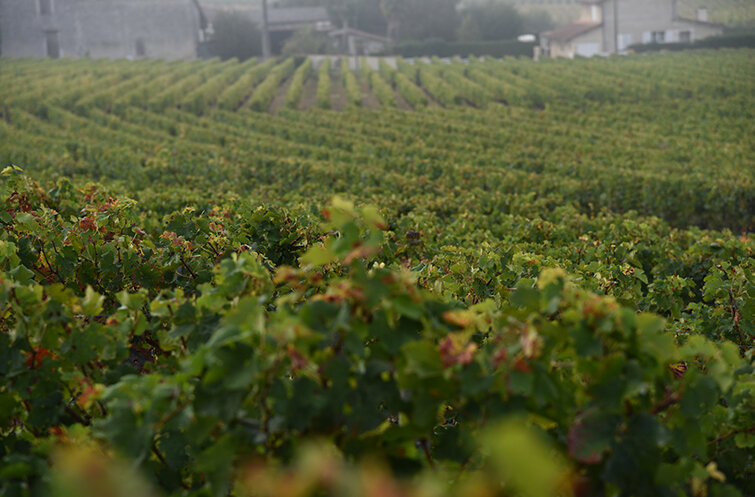
Two terroirs occupy the estate’s 13.6 acres: gravel and sand to the south, clay and limestone to the north. To hold the title, the winemaker must balance the age of the vine, the depth of the roots, elevation, and sun.
In Saint-Émilion each label in pursuit of grand cru must be grown on a committee-designated vineyard. Of more than 800 vineyards in the appellation, only about 200 enjoy the distinction.
The title is not terroir alone. Labels must also follow certain growing and fermentation practices, perform on the marketplace, and pass a blind tasting. The test is scored out of 20. A grand cru must reach at least 14.
Emperor Napoleon III introduced a classification of Bordeaux wines in 1855, to recognize the best for international showing. As a grand cru of Saint-Émilion, Château Du Parc stands in that line.